
Vishakha Nakshatra
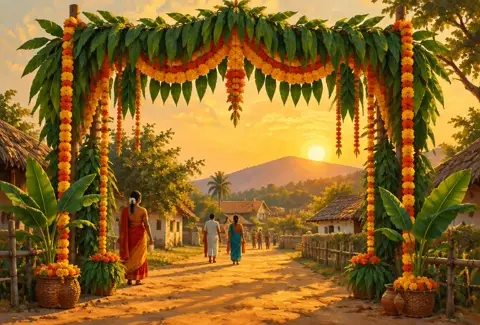
Vishakha nakshatra, the 16th of the 27, runs from 20°00′ of Tula (Libra) to 3°20′ of Vrishchik (Scorpio): three padas in Libra and the last in Scorpio. Vishakha means the forked or two-branched, and its old name was Radha. Indra and Agni together, Indragni, preside over it, Jupiter is its lord, and its symbol is a triumphal arch.
Lord
Jupiter
Deity
Indra and Agni together
Symbol
a triumphal arch
Gana
Rakshasa
Nadi
Antya
Letters
Ti, Tu, Te, To
Vishakha nakshatra padas
| Pada | Starts at | Letter | Rashi | Navamsa |
|---|---|---|---|---|
| 1 | 20°00′ Libra | Ti | Libra (Tula) | Aries |
| 2 | 23°20′ Libra | Tu | Libra (Tula) | Taurus |
| 3 | 26°40′ Libra | Te | Libra (Tula) | Gemini |
| 4 | 0°00′ Scorpio | To | Scorpio (Vrishchik) | Cancer |
Vishakha nakshatra meaning and deity
Indra, the warrior king of the gods, and Agni, the sacred fire, are invoked together as Indragni in many Vedic hymns: power joined to purpose, ambition joined to devotion. Vishakha carries both, and its forked shape is read as the point where one path divides into two, a star of decisive choices and single-minded pursuit of a goal. The triumphal arch, its symbol, is the gate of victory at the end of that pursuit. Its stars are usually identified as Zubenelgenubi and Zubeneschamali, α and β Librae, the two pans of the Scales, and the Sun crosses them from about 6 to 19 November.
Saturn reaches its deepest exaltation at 20° Tula, the exact point where Vishakha begins, and the Moon is debilitated at 3° Vrishchik, inside Vishakha's fourth pada. The month of Vaishakha is named after the full Moon here, and Vaishakha Purnima is Buddha Purnima, kept as the day of the Buddha's birth, enlightenment and passing. In Tamil the star is Visakam, and Vaikasi Visakam, the Visakam day of the month Vaikasi, is celebrated as the birth of Murugan.
Vishakha padas and name letters
Pada 1 (letter Ti, 20°00′ to 23°20′ Tula) falls in Mesh navamsa under Mars, the most driven quarter. Pada 2 (letter Tu, 23°20′ to 26°40′) takes Vrishabh as its navamsa, ruled by Venus, the most comfort-loving and artistic, at home in Venus's own sign of Tula.
Pada 3 (letter Te, 26°40′ to 30°00′ Tula) has a Mithun navamsa, under Mercury, making it the most talkative and clever. Pada 4 (letter To, 0°00′ to 3°20′ Vrishchik) maps to Kark in the navamsa, under the Moon, the only Scorpio pada, the most emotional and intense, and the one that holds the Moon's debilitation degree. Names such as Tilak or Tina for Ti, Tushar or Tulsi for Tu, Tejas or Teena for Te and Tosh or Toshi for To follow the custom.
Vishakha nakshatra characteristics
Classical verses picture Vishakha natives as radiant, articulate and competitive, eager for possessions and quick to quarrel when crossed. In modern terms the star gives ambition, focus and the drive to win: politicians, lawyers, activists, salespeople, researchers and athletes are typical. Jupiter as lord adds a sense of mission and sometimes a religious or philosophical goal.
The difficulty is impatience and envy when others succeed first. Vishakha in Tula is more diplomatic; in Vrishchik more secretive and intense. Rakshasa gana gives a forceful temperament and the tiger yoni, shared with Chitra, courage and a commanding presence.
Vishakha in kundli matching (kundli milan)
Vishakha counts as rakshasa gana with the tiger yoni on the Antya nadi. Chitra, two stars back, is the other tiger, and the cow stars Uttara Phalguni and Uttara Bhadrapada are tiger's enemies. Swati, the star before it, shares its nadi.
Chitra gives Vishakha 19½ of 21, its best result, and Shatabhisha 19. Rohini and Uttara Ashadha, both on its Antya nadi, give 3½. A Libra and a Scorpio partner can both be Vishakha, and the shared-star exception then clears their nadi.
Each star's koota points with Vishakha
| Partner nakshatra | Tara (3) | Yoni (4) | Gana (6) | Nadi (8) | Of 21 |
|---|---|---|---|---|---|
| Ashwini | 1½ | 2 | 1 | 8 | 12½ |
| Bharani | 1½ | 2 | 0 | 8 | 11½ |
| Krittika | 1½ | 2 | 6 | 0 | 9½ |
| Rohini | 1½ | 2 | 0 | 0 | 3½ |
| Mrigashira | 1½ | 2 | 1 | 8 | 12½ |
| Ardra | 3 | 2 | 0 | 8 | 13 |
| Punarvasu | 3 | 2 | 1 | 8 | 14 |
| Pushya | 3 | 2 | 1 | 8 | 14 |
| Ashlesha | 1½ | 2 | 6 | 0 | 9½ |
| Magha | 1½ | 2 | 6 | 0 | 9½ |
| Purva Phalguni | 1½ | 2 | 0 | 8 | 11½ |
| Uttara Phalguni | 1½ | 0 | 0 | 8 | 9½ |
| Hasta | 1½ | 2 | 1 | 8 | 12½ |
| Chitra | 1½ | 4 | 6 | 8 | 19½ |
| Swati | 3 | 2 | 1 | 0 | 6 |
| Anuradha | 3 | 2 | 1 | 8 | 14 |
| Jyeshtha | 1½ | 2 | 6 | 8 | 17½ |
| Mula | 1½ | 2 | 6 | 8 | 17½ |
| Purva Ashadha | 1½ | 2 | 0 | 8 | 11½ |
| Uttara Ashadha | 1½ | 2 | 0 | 0 | 3½ |
| Shravana | 1½ | 2 | 1 | 0 | 4½ |
| Dhanishta | 1½ | 2 | 6 | 8 | 17½ |
| Shatabhisha | 3 | 2 | 6 | 8 | 19 |
| Purva Bhadrapada | 3 | 2 | 0 | 8 | 13 |
| Uttara Bhadrapada | 3 | 0 | 0 | 8 | 11 |
| Revati | 1½ | 2 | 1 | 0 | 4½ |
Vishakha in muhurat and festivals
Muhurta Chintamani pairs Vishakha with Krittika as the two mishra, mixed, stars, suited to work with fire and metals and to blends of gentle and fierce acts. It is not on the vivah list. Vaishakha Purnima, the full Moon of its month, is Buddha Purnima, and the month as a whole is valued for charity and early-morning bathing.
Vishakha remedies and worship
Jupiter's Thursday observances, respect for teachers and the Guru stotra are the customary practices for a Vishakha Moon, along with havan, which honours Agni, and the Indra hymns of the Rig Veda. Giving during the month of Vaishakha is traditionally counted as especially meritorious. Vaikasi Visakam is kept at Murugan temples such as Tiruchendur and Palani with abhishekam and milk-pot processions, the best-known worship tied to this star in the South.
Vishakha and the Vimshottari dasha
A Vishakha birth begins in Jupiter mahadasha, 16 years in full, followed by Saturn's 19 and Mercury's 17. A Moon in the Scorpio pada leaves only the last part of Jupiter's period, so Saturn's long dasha starts in early childhood. At 21°40′ Tula, half a pada into the star, about 14 of Jupiter's 16 years remain.
Vishakha and keeping ambition kind during examination season
When an important examination approaches, the whole household can begin living by one person’s timetable. Vishakha offers a thoughtful image for this concentrated effort: the triumphal arch marks a destination, yet the path towards it is still made of ordinary days requiring food, sleep and human encouragement.
Indra and Agni jointly preside over Vishakha, while Jupiter is its planetary lord. Their traditional associations with power, energy and purpose can frame a useful family conversation about effort. The question becomes how to support a chosen goal without allowing every meal or phone call to become a review of performance.
Ask the student what kind of help feels useful before reorganising the house. Quiet study hours may matter more than motivational speeches. Vishakha’s focus can be honoured through a realistic weekly plan that includes time for doubts, revision and the unexpected difficulty of a topic that takes longer than anticipated.
Traditional reference points
| Attribute | Association |
|---|---|
| Deities | Indra and Agni |
| Planetary lord | Jupiter |
| Symbol | A triumphal arch |
| Yoni | Tiger |
Define the goal beyond a rank
Name the course, skill or opportunity the examination could open. A meaningful destination gives the timetable context and helps the student remember why this work matters to them personally.
Review the method rather than the person
If a practice paper goes poorly, ask which question types caused trouble and what support might help. Vishakha’s determined symbolism becomes constructive when attention moves towards an adjustable method rather than a fixed label.
Keep comparison outside the study room
A cousin’s marks cannot describe another learner’s circumstances. Family members can instead notice improving understanding, steadier revision and the courage to ask for help, keeping conversation specific and respectful.
Mark effort before results arrive
Plan a simple outing or favourite meal after the final paper, without attaching it to a predicted score. Vishakha’s arch can represent completion as well as victory. Whatever the next decision involves, the student should be able to return to a home where curiosity about their future remains larger than a single result, and where ambition continues alongside affection.
Frequently asked questions
Which rashi is Vishakha nakshatra?
Vishakha spans two signs: its first three padas lie in Tula (Libra) and its fourth in Vrishchik (Scorpio). Saturn's exaltation degree, 20° Tula, opens the star, and the Moon's debilitation degree, 3° Vrishchik, lies in its last pada.
What is the link between Vishakha and Buddha Purnima?
The month of Vaishakha is named after this star, and its full Moon, Vaishakha Purnima, is Buddha Purnima, kept as the day of the Buddha's birth, enlightenment and passing.
Who presides over Vishakha nakshatra?
Indra and Agni together, Indragni, a pair often invoked in the Vedas. Jupiter is the star's planetary lord, and its symbol is a triumphal arch.
Which star suits a Vishakha partner best?
Chitra, the other tiger star, gives Vishakha 19½ of 21 on the four star kootas, and Shatabhisha gives 19. Rohini and Uttara Ashadha, on Vishakha's Antya nadi, reach only 3½.
What are the Vishakha nakshatra name letters?
Ti, Tu and Te belong to the Tula padas and To to the single Vrishchik pada, the quarter that holds the Moon's debilitation degree.
What was Vishakha's old name?
Radha. Vedic star lists call it Radha, which is why the next star is Anuradha, the one that follows Radha.
From lagna to the running dasha, one written report covers your own chart.
Get my kundli report, ₹149