
Dhanishta Nakshatra
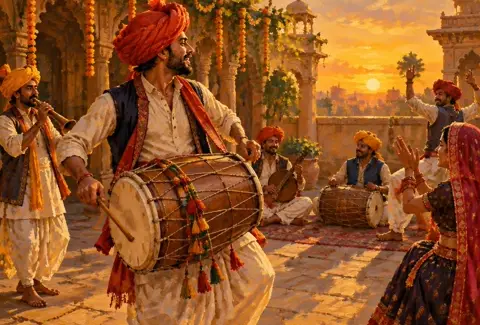
Dhanishta nakshatra, the 23rd of the 27, runs from 23°20′ of Makar (Capricorn) to 6°40′ of Kumbh (Aquarius), so its first two padas are Capricorn and its last two Aquarius. Dhanishta means the wealthiest, and its older name Shravishtha means the most famous. The eight Vasus preside over it and Mars is its lord; its symbol is a drum.
Lord
Mars
Deity
the eight Vasus
Symbol
a drum
Gana
Rakshasa
Nadi
Madhya
Letters
Ga, Gi, Gu, Ge
Dhanishta nakshatra padas
| Pada | Starts at | Letter | Rashi | Navamsa |
|---|---|---|---|---|
| 1 | 23°20′ Capricorn | Ga | Capricorn (Makar) | Leo |
| 2 | 26°40′ Capricorn | Gi | Capricorn (Makar) | Virgo |
| 3 | 0°00′ Aquarius | Gu | Aquarius (Kumbh) | Libra |
| 4 | 3°20′ Aquarius | Ge | Aquarius (Kumbh) | Scorpio |
Dhanishta nakshatra meaning and deity
The Vasus are eight gods of the elements and the bright world: earth, water, fire, wind, sky, the Sun, the Moon and the stars. In the Mahabharata the eight Vasus are cursed to be born on earth; seven are released at birth by the Ganga, and the eighth, Prabhasa, lives a full life as Bhishma. Dhanishta carries their abundance and their sense of duty, and the drum, its symbol, gives the rhythm of music and of collective effort.
Mars as lord makes the star energetic and bold. Each of Mars's three stars, Mrigashira, Chitra and Dhanishta, is split down the middle, two padas in one sign and two in the next. Mars is exalted at 28° Makar, a degree inside Dhanishta's second pada, so the planet of courage is at its strongest in this very star. The star's four stars form the small, bright constellation Delphinus, and the Sun crosses Dhanishta from about 6 to 19 February. Under its old name Shravishtha the star has a place in astronomical history: the Vedanga Jyotisha, the oldest Indian calendar text, places the winter solstice at the beginning of Shravishtha, a statement scholars use to date that text.
Dhanishta padas and naam akshar
Pada 1 (letter Ga, 23°20′ to 26°40′ Makar) maps to Simha in the navamsa, under the Sun, proud and commanding. Pada 2 (letter Gi, 26°40′ to 30°00′ Makar) lands in Kanya in the navamsa chart, with Mercury as lord and holds Mars's exaltation degree, the most capable and organised quarter.
Pada 3 (letter Gu, 0°00′ to 3°20′ Kumbh) is a Tula-navamsa quarter ruled by Venus, the most artistic and musical. Pada 4 (letter Ge, 3°20′ to 6°40′ Kumbh) falls in Vrishchik navamsa under Mars, the most intense. Names such as Gaurav or Gauri for Ga, Girish or Gita for Gi, Gunjan or Gurmeet for Gu and Geet or Geetanjali for Ge follow the custom.
Dhanishta nakshatra characteristics
Varahamihira describes the Dhanishta native as generous, wealthy, brave and fond of music, with a strong wish for money. The star produces drummers, singers, athletes, organisers and people who keep a group moving in time. Saturn's signs give discipline and ambition, and Mars gives drive, so Dhanishta natives often rise through effort to positions of wealth or reputation.
The difficulty is restlessness and a sharp temper, and a tendency to put work and status before private life. Rakshasa gana describes a self-reliant, forceful temperament, and the lion yoni courage and pride. Dhanishta natives in Makar are more practical; those in Kumbh more social and idealistic. In Kerala the star is Avittam, and Avittam in the month of Chingam, the day after Thiruvonam, closes the Onam festival in many homes.
Dhanishta in kundli matching (kundli milan)
Dhanishta brings rakshasa gana, the lion yoni and Madhya nadi. Purva Bhadrapada is the other lion; Bharani and Revati, the elephant stars, are the lion's enemies. Chitra and Mrigashira, its fellow Mars stars, share its nadi.
Shatabhisha, the next star, is Dhanishta's best partner at 19 of 21, and six stars follow at 17½: Krittika, Ashlesha, Magha, Vishakha, Jyeshtha and Mula. Bharani, an elephant star on its nadi, falls to 1½.
Each star's koota points with Dhanishta
| Partner nakshatra | Tara (3) | Yoni (4) | Gana (6) | Nadi (8) | Of 21 |
|---|---|---|---|---|---|
| Ashwini | 1½ | 2 | 1 | 8 | 12½ |
| Bharani | 1½ | 0 | 0 | 0 | 1½ |
| Krittika | 1½ | 2 | 6 | 8 | 17½ |
| Rohini | 3 | 2 | 0 | 8 | 13 |
| Mrigashira | 3 | 2 | 1 | 0 | 6 |
| Ardra | 3 | 2 | 0 | 8 | 13 |
| Punarvasu | 1½ | 2 | 1 | 8 | 12½ |
| Pushya | 1½ | 2 | 1 | 0 | 4½ |
| Ashlesha | 1½ | 2 | 6 | 8 | 17½ |
| Magha | 1½ | 2 | 6 | 8 | 17½ |
| Purva Phalguni | 1½ | 2 | 0 | 0 | 3½ |
| Uttara Phalguni | 1½ | 2 | 0 | 8 | 11½ |
| Hasta | 3 | 2 | 1 | 8 | 14 |
| Chitra | 3 | 2 | 6 | 0 | 11 |
| Swati | 3 | 2 | 1 | 8 | 14 |
| Vishakha | 1½ | 2 | 6 | 8 | 17½ |
| Anuradha | 1½ | 2 | 1 | 0 | 4½ |
| Jyeshtha | 1½ | 2 | 6 | 8 | 17½ |
| Mula | 1½ | 2 | 6 | 8 | 17½ |
| Purva Ashadha | 1½ | 2 | 0 | 0 | 3½ |
| Uttara Ashadha | 1½ | 2 | 0 | 8 | 11½ |
| Shravana | 3 | 2 | 1 | 8 | 14 |
| Shatabhisha | 3 | 2 | 6 | 8 | 19 |
| Purva Bhadrapada | 1½ | 4 | 0 | 8 | 13½ |
| Uttara Bhadrapada | 1½ | 2 | 0 | 0 | 3½ |
| Revati | 1½ | 0 | 1 | 8 | 10½ |
Dhanishta in muhurat and panchak
Muhurta Chintamani counts Dhanishta among the chara, movable, stars, good for travel, vehicles and new ventures. Its second half, in Kumbh, begins panchak, the five-star stretch through Shatabhisha and the two Bhadrapadas to Revati, during which families avoid laying a roof, gathering wood and travelling south, and add a rite if a death occurs.
Dhanishta remedies and worship
Worship of the Vasus is rare today, so families with a Dhanishta Moon usually honour Shiva and Hanuman, offering red flowers on Tuesdays for Mars. Music offered in worship, kirtan or a temple drum, suits this star of rhythm particularly well.
Dhanishta and the Vimshottari dasha
A Dhanishta birth begins in Mars mahadasha, 7 years in full, followed by Rahu's 18 and Jupiter's 16. A Moon late in the star, in Kumbh, leaves only a short Mars balance, so Rahu's period begins in early childhood.
Dhanishta and a fair rhythm for shared celebrations
Organising a festival meal or a family wedding often reveals two different groups: those enjoying the occasion and those quietly keeping it running. Dhanishta's drum provides a helpful image for bringing them together. A celebration has a kinder rhythm when the people arranging transport, serving food, and clearing plates can also take their place among the guests.
The eight Vasus, Dhanishta's deities, invite reflection on shared resources. In a household celebration, the resources include money, time, rooms, utensils, and attention. Naming them early helps relatives contribute without competing. Someone unable to offer much financially may still be the best person to welcome arriving cousins or help an older guest find a comfortable seat.
Dhanishta's link with music can also encourage participation beyond a polished performance. Let a grandparent lead an old song and a teenager explain a newer one. The gathering gains texture when different generations contribute something recognisably their own. Belonging need not depend on being the loudest singer or the most generous giver.
Dhanishta traditional reference
| Association | Traditional detail |
|---|---|
| Deities | Eight Vasus |
| Lord of the star | Mars |
| Musical symbol | Drum |
| Traditional nature | Movable |
Give every helper an interval off duty
Build breaks into the plan rather than hoping they happen. Dhanishta teamwork becomes visible when the main cook sits down to eat while someone else takes charge of serving.
Keep contributions clear and private
Discuss shared expenses with the relatives involved, away from the festive audience. Quiet clarity protects affection better than public announcements about who paid for which part of the occasion.
Create a place for quieter guests
Arrange a calmer corner and invite participation without insistence. A child watching the musicians or an elder listening from a chair may feel deeply included without joining every activity.
End with thanks that name the work
Remember the person who collected chairs and the cousin who stayed to tidy. For Dhanishta, a successful gathering leaves more than photographs: it leaves people willing to meet and make something joyful together again.
Frequently asked questions
Which rashi is Dhanishta nakshatra?
Dhanishta is split: padas 1 and 2 lie in Makar (Capricorn) and padas 3 and 4 in Kumbh (Aquarius). Mars's exaltation degree, 28° Makar, lies in pada 2.
Is Dhanishta a panchak nakshatra?
Only its second half, the two padas in Kumbh, falls in panchak, which runs from there through Shatabhisha, Purva and Uttara Bhadrapada and Revati. The Makar half of Dhanishta is outside panchak.
Which nakshatra is best for a Dhanishta partner?
Shatabhisha, the very next star, tops Dhanishta's list at 19 of 21: both are rakshasa gana, on different nadis. Bharani is lowest at 1½, since lion and elephant are enemy yonis.
What are the Dhanishta nakshatra name letters?
Ga and Gi in Makar, Gu and Ge in Kumbh. A Gi name marks the pada that holds Mars's exaltation degree, 28° Makar.
Who are the Vasus of Dhanishta?
The eight Vasus are gods of the elements and the bright world. In the Mahabharata they are cursed to be born as sons of Ganga; seven return at once and the eighth lives on as Bhishma.
What is the old name of Dhanishta?
Shravishtha, the most famous. The Vedanga Jyotisha, the oldest Indian calendar text, places the winter solstice at the start of Shravishtha, which is how historians date it. Dhanishta, the wealthiest, is the later and now common name.
A chart shows positions; a report explains them. Read your career, marriage and dasha timing in one place.
Get my kundli report, ₹149