
Jyeshtha (Jyeshta) Nakshatra
Jyeshtha nakshatra, also written Jyeshta nakshatra, is the 18th of the 27 and covers the last 13°20′ of Vrishchik (Scorpio), from 16°40′ to 30°00′. Its name means the eldest or the senior, and its bright red star is Antares. Indra, king of the gods, presides over it and Mercury is its lord.
Lord
Mercury
Deity
Indra, king of the gods
Symbol
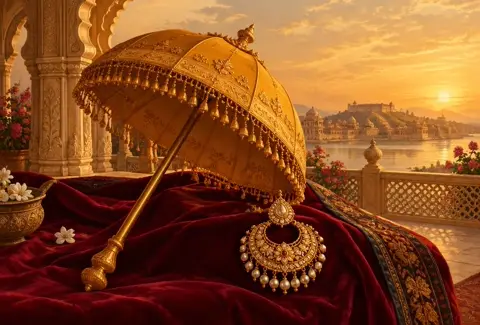
an earring or umbrella
Gana
Rakshasa
Nadi
Adi
Letters
No, Ya, Yi, Yu
Jyeshtha nakshatra padas
| Pada | Starts at | Letter | Rashi | Navamsa |
|---|---|---|---|---|
| 1 | 16°40′ Scorpio | No | Scorpio (Vrishchik) | Sagittarius |
| 2 | 20°00′ Scorpio | Ya | Scorpio (Vrishchik) | Capricorn |
| 3 | 23°20′ Scorpio | Yi | Scorpio (Vrishchik) | Aquarius |
| 4 | 26°40′ Scorpio | Yu | Scorpio (Vrishchik) | Pisces |
Jyeshtha nakshatra meaning and deity
Indra is the chief of the Vedic gods, the wielder of the thunderbolt who slew Vritra and released the waters. Jyeshtha carries his qualities of seniority, command and protection, and also the burdens that come with them: responsibility for others and the loneliness of leadership. Its symbol is an earring or a round talisman, sometimes an umbrella, both emblems of rank. Antares, its red star, takes its Greek name, rival of Mars, from that colour, apt for a star in Mars's sign; the Sun passes it from about 2 to 15 December.
Mercury as lord adds intelligence and strategy, so this is a star of the capable elder who plans and protects. The month of Jyeshtha gets its name from the full Moon near this star. Jyeshtha Purnima is Snana Purnima at Puri, when Jagannath is bathed in public before the Rath Yatra, and women in Maharashtra and Gujarat keep the Vat Purnima fast for their husbands on the same full Moon. Jyeshtha ends at the last degree of Vrishchik, a water sign, and the next star, Mula, begins Dhanu, a fire sign; this junction is one of the three gandanta zones, which is why Jyeshtha is counted among the gandmool stars.
Quarters of Jyeshtha: padas and letters
Pada 1 (letter No, 16°40′ to 20°00′ Vrishchik) lands in Dhanu in the navamsa chart, with Jupiter as lord, generous and principled. Pada 2 (letter Ya, 20°00′ to 23°20′) and pada 3 (letter Yi, 23°20′ to 26°40′) fall in Makar and Kumbh navamsas under Saturn, the most disciplined and hard-working quarters, suited to administration and long careers.
Pada 4 (letter Yu, 26°40′ to 30°00′) is a Meen-navamsa quarter ruled by Jupiter and sits at the gandanta point itself, which is why families most often perform the gandmool shanti for a child born in this pada. Names such as Noopur or Nobel for No, Yash or Yamini for Ya, Yishaan for Yi and Yuvraj or Yukti for Yu follow the letters. Read together, the four padas run through Jupiter, Saturn, Saturn and Jupiter as navamsa lords, so the two middle quarters are the most austere and the outer two the most generous.
Jyeshtha nakshatra characteristics
Jyeshtha natives are traditionally described as contented, devoted to dharma and having few but close friends, with a quick temper. They take charge in crises, protect younger relatives and colleagues, and often become the de facto head of the family. Management, defence, police, politics, law, investigation, surgery and occult study suit the star.
The difficulty is a mix of pride and private insecurity: the eldest who must always be strong. A Jyeshtha Moon can be secretive and can test loyalty, and rakshasa gana gives a self-reliant, forceful temperament. The deer yoni softens it with sensitivity that the native rarely shows in public.
Jyeshtha in kundli matching (kundli milan)
Jyeshtha is rakshasa gana, deer yoni and Adi nadi. Anuradha is its fellow deer, the dog stars Ardra and Mula its enemies. Mula, the very next star, is therefore both a yoni enemy and on the same nadi.
Ashlesha and Magha reach 19 of 21 with Jyeshtha, both rakshasa stars on another nadi, and Krittika, Chitra, Vishakha and Dhanishta follow at 17½. Ardra, a dog star on Jyeshtha's own nadi, sinks to 1½.
Each star's koota points with Jyeshtha
| Partner nakshatra | Tara (3) | Yoni (4) | Gana (6) | Nadi (8) | Of 21 |
|---|---|---|---|---|---|
| Ashwini | 3 | 2 | 1 | 0 | 6 |
| Bharani | 1½ | 2 | 0 | 8 | 11½ |
| Krittika | 1½ | 2 | 6 | 8 | 17½ |
| Rohini | 1½ | 2 | 0 | 8 | 11½ |
| Mrigashira | 1½ | 2 | 1 | 8 | 12½ |
| Ardra | 1½ | 0 | 0 | 0 | 1½ |
| Punarvasu | 1½ | 2 | 1 | 0 | 4½ |
| Pushya | 3 | 2 | 1 | 8 | 14 |
| Ashlesha | 3 | 2 | 6 | 8 | 19 |
| Magha | 3 | 2 | 6 | 8 | 19 |
| Purva Phalguni | 1½ | 2 | 0 | 8 | 11½ |
| Uttara Phalguni | 1½ | 2 | 0 | 0 | 3½ |
| Hasta | 1½ | 2 | 1 | 0 | 4½ |
| Chitra | 1½ | 2 | 6 | 8 | 17½ |
| Swati | 1½ | 2 | 1 | 8 | 12½ |
| Vishakha | 1½ | 2 | 6 | 8 | 17½ |
| Anuradha | 3 | 4 | 1 | 8 | 16 |
| Mula | 3 | 0 | 6 | 0 | 9 |
| Purva Ashadha | 1½ | 2 | 0 | 8 | 11½ |
| Uttara Ashadha | 1½ | 2 | 0 | 8 | 11½ |
| Shravana | 1½ | 2 | 1 | 8 | 12½ |
| Dhanishta | 1½ | 2 | 6 | 8 | 17½ |
| Shatabhisha | 1½ | 2 | 6 | 0 | 9½ |
| Purva Bhadrapada | 1½ | 2 | 0 | 0 | 3½ |
| Uttara Bhadrapada | 3 | 2 | 0 | 8 | 13 |
| Revati | 3 | 2 | 1 | 8 | 14 |
Jyeshtha in muhurat and gandmool
Muhurta Chintamani places Jyeshtha among the tikshna, sharp, stars with Ardra, Ashlesha and Mula, used for firm or severing acts rather than celebrations; it is not on the vivah or griha pravesh lists. A birth in Jyeshtha is gandmool, and many families perform the gandmool shanti puja on the 27th day, when the Moon returns to the birth star. It is a simple family custom, not a cause for fear.
Jyeshtha remedies and worship
Worship of Indra in the form of rain prayers and offerings, and more commonly of Vishnu, Indra's younger brother as Vamana, is the customary practice. Because Mercury rules the star, reciting the Vishnu Sahasranama on Wednesdays and giving green gram or books to students are kept by many Jyeshtha families.
Jyeshtha and the Vimshottari dasha
A Jyeshtha birth begins in Mercury mahadasha, 17 years in full. A Moon early in the star, near 17° Vrishchik, leaves most of it; a Moon near 29° leaves little. Ketu's 7 years follow and then Venus's 20, so many Jyeshtha natives reach Venus's long period in early adulthood.
Jyeshtha and allowing the eldest to be supported
The eldest sibling is often the first person called when a form needs signing, a parent needs company, or relatives disagree. Jyeshtha gives families a thoughtful opening to examine that position. Being trusted can feel deeply meaningful, yet the person everyone relies on may rarely be asked whether they have the time, information, or strength to help today.
Indra's association with Jyeshtha brings authority into view, while the umbrella symbol suggests shelter. Shelter works best when its holder is not left standing alone in the rain. In family terms, respect for seniority can include practical backup: another sibling making the appointment, checking documents, or taking the difficult phone call instead.
Jyeshtha's protective image can therefore be read as shared stewardship rather than permanent command. Younger adults need opportunities to develop judgement, and older siblings need permission to step back without feeling that affection will weaken. Responsibility becomes more sustainable when it follows present capacity instead of staying fixed to birth order.
Jyeshtha traditional reference
| Association | Traditional detail |
|---|---|
| Presiding figure | Indra |
| Planetary lord | Mercury |
| Protective symbol | Umbrella or earring |
| Yoni | Deer |
Ask before placing another duty
A request gives the eldest room to answer honestly. Jyeshtha care loses some of its weight when relatives replace assumptions with a clear account of what help is actually needed.
Share information as well as errands
Keep essential household contacts and document locations accessible to the appropriate adults. If only one person knows every detail, even a short absence can turn into a stream of urgent messages.
Let a different person lead occasionally
A younger sibling can coordinate a visit or organise a repair from start to finish. Avoid correcting every harmless difference in method; confidence grows when responsibility comes with enough room to exercise judgement.
Include the protector in ordinary affection
Call with good news, send a funny photograph, or invite them for a meal without an accompanying request. Jyeshtha dignity feels gentler when the capable person is cherished for their company, not only their usefulness.
Frequently asked questions
Is Jyeshtha (Jyeshta) a gandmool nakshatra?
Yes. Jyeshtha closes Vrishchik, and its fourth pada touches the border with Dhanu, the gandanta between water and fire. Many families arrange a gandmool puja for a Jyeshtha child when the Moon returns to the star a lunar month later, and treat it as a blessing rather than a warning.
What does Jyeshtha mean?
Jyeshtha means the eldest or the senior. Its presiding deity is Indra, chief of the gods, and its bright star is Antares, so the name is read as seniority and leadership.
Which nakshatra is best for a Jyeshtha partner?
Ashlesha and Magha lead at 19 out of 21 for a Jyeshtha Moon: fellow rakshasa stars, each on another nadi. Ardra, a dog-yoni star on the same Adi nadi, manages only 1½.
What are the Jyeshtha nakshatra name letters?
No, Ya, Yi and Yu, in order from 16°40′ to 30° Vrishchik. A baby born in the last pada, right at the gandanta, takes Yu.
What is the first mahadasha for Jyeshtha?
Mercury mahadasha, 17 years in full, with the balance set by the Moon's position in the star. Ketu's 7 years come next.
Your kundli has the details; the report puts them in order, from personality to dasha dates.
Get my kundli report, ₹149