
Mula Nakshatra
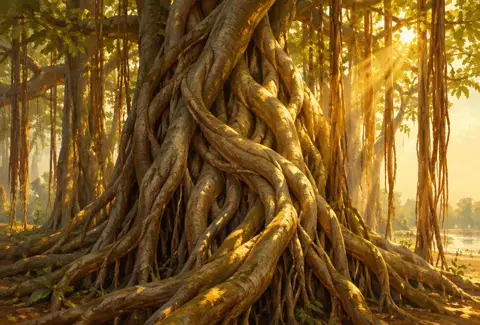
Mula nakshatra, the 19th of the 27, opens Dhanu (Sagittarius) and runs from 0°00′ to 13°20′. Mula means the root, and its symbol is a bunch of roots tied together. Nirriti, goddess of dissolution, presides over it and Ketu is its lord, and the centre of our galaxy lies in this part of the sky.
Lord
Ketu
Deity
Nirriti, goddess of dissolution
Symbol
roots tied together
Gana
Rakshasa
Nadi
Adi
Letters
Ye, Yo, Bha, Bhi
Mula nakshatra padas
| Pada | Starts at | Letter | Rashi | Navamsa |
|---|---|---|---|---|
| 1 | 0°00′ Sagittarius | Ye | Sagittarius (Dhanu) | Aries |
| 2 | 3°20′ Sagittarius | Yo | Sagittarius (Dhanu) | Taurus |
| 3 | 6°40′ Sagittarius | Bha | Sagittarius (Dhanu) | Gemini |
| 4 | 10°00′ Sagittarius | Bhi | Sagittarius (Dhanu) | Cancer |
Mula nakshatra meaning and deity
Nirriti is the Vedic goddess of decay and misfortune, guardian of the southwest, to whom offerings were made to keep harm away. Mula takes from her the work of pulling things out by the root: ending what has decayed so that something new can grow. Ketu, the headless node, adds detachment and a search for what lies beneath appearances, which makes Mula the most investigative of the stars.
The direction of the galactic centre falls at about 3° of sidereal Dhanu, inside Mula's first pada, a modern fact that many astrologers find fitting for the root star. Jupiter's moolatrikona, its office sign, covers the first 10° of Dhanu, so three of Mula's four padas also sit in Jupiter's strongest portion. The Sun enters Mula with Dhanu sankranti in mid-December and stays about two weeks, the start of kharmas, the month in which weddings are traditionally paused. During Navratri, Saraswati is invoked on the day the Moon is in Mula, worshipped in Purva Ashadha and sent off in Shravana, a sequence many South Indian and Bengali families still follow for the books and instruments laid before her.
Mula padas and name letters
Pada 1 (letter Ye, 0°00′ to 3°20′ Dhanu) falls in Mesh navamsa under Mars and sits at the gandanta, the junction with Vrishchik; it is the pada most often marked for the gandmool shanti. Pada 2 (letter Yo, 3°20′ to 6°40′) takes Vrishabh as its navamsa, ruled by Venus, the steadiest and most comfort-loving quarter.
Pada 3 (letter Bha, 6°40′ to 10°00′) has a Mithun navamsa, under Mercury, making it the most curious and argumentative, suited to research and debate. Pada 4 (letter Bhi, 10°00′ to 13°20′) maps to Kark in the navamsa, under the Moon, the most emotional and devotional. Names such as Yesha for Ye, Yogesh or Yogita for Yo, Bharat or Bhavna for Bha and Bhishma for Bhi follow the letters.
Mula nakshatra characteristics
Varahamihira describes the Mula native as proud, wealthy, happy, steady and fond of comfort, and not cruel, a kinder picture than the star's fierce reputation. Mula natives question everything, dig to the bottom of a subject and are not afraid of endings: research, medicine, law, philosophy, archaeology, herbal and root crafts and spiritual study suit them.
The difficulty is restlessness and a tendency to tear down before building. Rakshasa gana gives independence and directness, and the dog yoni loyalty to a few. A Mula native often goes through one sharp break in life, a move, a career change, a loss, that becomes the root of later growth.
Mula in kundli matching (kundli milan)
Mula is rakshasa gana with the dog yoni on the Adi nadi. Ardra is the other dog; Anuradha and Jyeshtha, the deer stars, are its enemies. Jyeshtha, just before it across the sign border, also shares its nadi.
Ashlesha and Magha lead Mula's list at 19 of 21, followed by four stars at 17½: Krittika, Chitra, Vishakha and Dhanishta. Uttara Phalguni and Purva Bhadrapada, manushya stars on Mula's nadi, stop at 3½.
Each star's koota points with Mula
| Partner nakshatra | Tara (3) | Yoni (4) | Gana (6) | Nadi (8) | Of 21 |
|---|---|---|---|---|---|
| Ashwini | 3 | 2 | 1 | 0 | 6 |
| Bharani | 3 | 2 | 0 | 8 | 13 |
| Krittika | 1½ | 2 | 6 | 8 | 17½ |
| Rohini | 1½ | 2 | 0 | 8 | 11½ |
| Mrigashira | 1½ | 2 | 1 | 8 | 12½ |
| Ardra | 1½ | 4 | 0 | 0 | 5½ |
| Punarvasu | 1½ | 2 | 1 | 0 | 4½ |
| Pushya | 1½ | 2 | 1 | 8 | 12½ |
| Ashlesha | 3 | 2 | 6 | 8 | 19 |
| Magha | 3 | 2 | 6 | 8 | 19 |
| Purva Phalguni | 3 | 2 | 0 | 8 | 13 |
| Uttara Phalguni | 1½ | 2 | 0 | 0 | 3½ |
| Hasta | 1½ | 2 | 1 | 0 | 4½ |
| Chitra | 1½ | 2 | 6 | 8 | 17½ |
| Swati | 1½ | 2 | 1 | 8 | 12½ |
| Vishakha | 1½ | 2 | 6 | 8 | 17½ |
| Anuradha | 1½ | 0 | 1 | 8 | 10½ |
| Jyeshtha | 3 | 0 | 6 | 0 | 9 |
| Purva Ashadha | 3 | 2 | 0 | 8 | 13 |
| Uttara Ashadha | 1½ | 2 | 0 | 8 | 11½ |
| Shravana | 1½ | 2 | 1 | 8 | 12½ |
| Dhanishta | 1½ | 2 | 6 | 8 | 17½ |
| Shatabhisha | 1½ | 2 | 6 | 0 | 9½ |
| Purva Bhadrapada | 1½ | 2 | 0 | 0 | 3½ |
| Uttara Bhadrapada | 1½ | 2 | 0 | 8 | 11½ |
| Revati | 3 | 2 | 1 | 8 | 14 |
Mula in muhurat and gandmool
Muhurta Chintamani counts Mula among the tikshna, sharp, stars with Ardra, Ashlesha and Jyeshtha, used for decisive or severing work. Unusually for a sharp star, Mula appears on the classical vivah list. A birth in Mula is gandmool, and families usually perform the gandmool shanti on the 27th day, when the Moon returns to Mula; it is a short family rite, not a sign of misfortune.
Mula remedies and worship
Ganesha worship, as the remover of obstacles, and Ketu's customary observances, such as feeding stray dogs and giving blankets, are kept for a Mula Moon. Some families honour Nirriti's role by keeping the southwest corner of the home clean and uncluttered, an old vastu link. In the South the star is called Moolam, and Tamil Nadu celebrates Hanuman Jayanti on the Moolam day of Margazhi.
Mula and the Vimshottari dasha
A Mula birth begins in Ketu mahadasha, 7 years in full, followed by Venus's 20 years, the longest period, and then the Sun's 6. Many Mula natives therefore spend their whole schooling and early career in Venus's dasha, a long, comparatively comfortable stretch after a brief start.
Mula and the family archive: asking where we come from
Questions about ancestry can feel tender when relatives remember the same event differently. Mula offers a thoughtful image for this situation: bundled roots belong together even when their paths through the soil are tangled. A family history project can honour that complexity without demanding one approved version of every memory.
With Nirriti as deity and Ketu as planetary lord, Mula traditionally turns attention towards what remains when appearances fall away. At home, this symbolism can inspire careful sorting of photographs, letters, recipes and migration stories. Rather than using astrology (jyotish) to settle an argument, let Mula encourage curiosity about how each generation understood its circumstances.
Begin with a small collection that everyone can enjoy. An old school certificate may open a conversation about an interrupted education; a handwritten recipe may preserve the name of someone rarely mentioned. Give younger relatives room to ask questions without making elders feel examined.
Traditional reference points
| Attribute | Association |
|---|---|
| Planetary lord | Ketu |
| Deity | Nirriti |
| Symbol | Roots tied together |
| Gana | Rakshasa |
Making space for several memories
Mula can lend its searching spirit to a gentle interview. Ask an elder which object they would save first, then listen for the relationship behind their choice rather than only recording dates.
Ask before sharing an heirloom
A wedding photograph may carry private grief alongside celebration. Obtain permission before putting it in a family group, and allow someone to keep a letter unread. Respect is also part of preserving roots.
Keep the uncertainty visible
When two accounts differ, label each with its speaker instead of choosing a winner. A note saying that a date is approximate keeps the archive honest and welcomes later discoveries.
Pass on a living connection
Invite a child to cook one remembered dish with an elder this month. Mula then becomes a reminder that inheritance includes shared attention, not merely stored belongings. Families exploring a birth connection can first confirm it through the [nakshatra calculator](/astrology (jyotish)/nakshatra-calculator), then return to the people whose stories make those roots meaningful.
Frequently asked questions
Is Mula nakshatra a gandmool nakshatra?
Mula opens Dhanu just after the end of Vrishchik, one of three points where a water sign meets a fire sign, so it counts as gandmool. Its first pada, on that border, is the one most families mark, usually with a Ganesha puja and a havan when the Moon comes back to Mula.
Is Mula nakshatra good for marriage?
Mula is one of the few sharp stars admitted to the classical vivah list, so a Mula day can be chosen for a wedding when the tithi, the weekday and the couple's lagna also agree.
Which nakshatra matches best with Mula?
For a Mula Moon the strongest star partners are Ashlesha and Magha, each 19 of 21: they share Mula's rakshasa gana but sit on the Antya nadi. Uttara Phalguni and Purva Bhadrapada, on Mula's own Adi nadi, drop to 3½.
What are Mula nakshatra name letters?
Ye and Yo open the star at the Vrishchik border; Bha and Bhi, the two later padas, carry the B sound that runs on into Purva Ashadha's Bhu.
Who rules Mula nakshatra?
Ketu is the planetary lord and Nirriti, goddess of dissolution, the presiding deity. A Mula birth starts in Ketu's 7-year mahadasha.
Why is Saraswati invoked in Mula during Navratri?
Many families follow a four-star sequence for Saraswati during Navratri: the invocation when the Moon is in Mula, the main puja in Purva Ashadha, the offering in Uttara Ashadha and the farewell in Shravana. Books and instruments stay before the goddess until the last day.
Your chart is ready. The Kundli Report turns it into plain words: personality, career, love and dasha.
Get my kundli report, ₹149