
Punarvasu Nakshatra
Punarvasu nakshatra, the 7th of the 27, runs from 20°00′ of Mithun (Gemini) to 3°20′ of Kark (Cancer): three padas in Gemini and the last in Cancer. Punarvasu means the return of the good, or light again, and its two bright stars are Castor and Pollux. Aditi, mother of the gods, presides over it and Jupiter is its lord.
Lord
Jupiter
Deity
Aditi, mother of the gods
Symbol
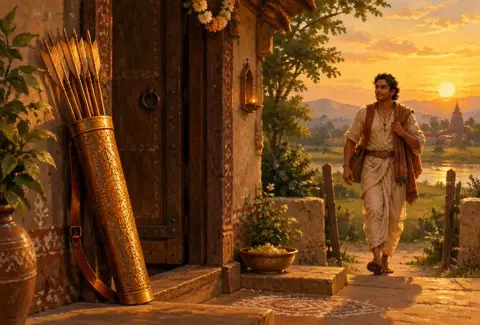
a quiver of arrows
Gana
Deva
Nadi
Adi
Letters
Ke, Ko, Ha, Hi
Punarvasu nakshatra padas
| Pada | Starts at | Letter | Rashi | Navamsa |
|---|---|---|---|---|
| 1 | 20°00′ Gemini | Ke | Gemini (Mithun) | Aries |
| 2 | 23°20′ Gemini | Ko | Gemini (Mithun) | Taurus |
| 3 | 26°40′ Gemini | Ha | Gemini (Mithun) | Gemini |
| 4 | 0°00′ Cancer | Hi | Cancer (Kark) | Cancer |
Punarvasu nakshatra meaning and deity
Aditi is the boundless one, mother of the Adityas and of the gods, the Vedic image of space without limit and of a mother's forgiving protection. Punarvasu takes from her the power of renewal: whatever is lost returns, whatever is broken can be begun again. Its symbol is a quiver of arrows, ready to be used again and again.
Valmiki's Ramayana places Rama's birth under the star whose deity is Aditi, that is Punarvasu, on the ninth day of Chaitra, which is why Rama Navami calendars note the star. Jupiter as lord adds wisdom, generosity and faith. The star bridges Mercury's sign and the Moon's, so intelligence and feeling meet in it. Jupiter, its lord, reaches exaltation at 5° Kark, just past Punarvasu's last pada, so the star stands at the doorway of its own lord's best sign. Its twin stars, Castor and Pollux, are often drawn as a bow beside the quiver, and some lists give the bow as its symbol.
Punarvasu padas and name letters
Pada 1 (letter Ke, 20°00′ to 23°20′ Mithun) falls in Mesh navamsa under Mars, the most active quarter. Pada 2 (letter Ko, 23°20′ to 26°40′) takes Vrishabh as its navamsa, ruled by Venus, the most settled and artistic. Pada 3 (letter Ha, 26°40′ to 30°00′ Mithun) is Mithun navamsa in Mithun rashi, vargottama, the most curious and communicative.
Pada 4 (letter Hi, 0°00′ to 3°20′ Kark) is Kark navamsa in Kark rashi, also vargottama, the most nurturing and the only Cancer pada. Names such as Keshav or Ketaki for Ke, Komal or Kovid for Ko, Harsh or Hansa for Ha and Himanshu or Hina for Hi follow the custom. The marker star used by Indian astronomers is Pollux, the brighter of the twins, which lies close to the ecliptic at the end of Mithun.
Punarvasu nakshatra characteristics
Classical verses describe the Punarvasu native as self-controlled, good-natured and content with little. The star gives optimism, forgiveness and the ability to start again after setbacks, and its natives are often teachers, counsellors, writers, travellers and people who bring families back together. Hospitality and a love of home are typical.
The difficulty is a tendency to repeat the same choices, the return that becomes a circle, and a reluctance to plan far ahead. Deva gana gives a gentle temperament and the cat yoni independence. Punarvasu natives usually need freedom to move and a home to come back to.
Punarvasu in kundli matching (kundli milan)
Punarvasu carries deva gana, the cat yoni and Adi nadi into guna milan. The cat pairs fully with Ashlesha and is hostile to the rat stars, Magha and Purva Phalguni. Ardra before it and Hasta and Uttara Phalguni further on share its Adi nadi.
Three deva stars off its nadi, Pushya, Swati and Anuradha, lead Punarvasu's list at 19 of 21, and Uttara Bhadrapada follows at 18. Jyeshtha and Mula reach only 4½. Because Punarvasu spans two signs, a Gemini and a Cancer partner can both be born in it, and the classical exception then clears their shared nadi.
Each star's koota points with Punarvasu
| Partner nakshatra | Tara (3) | Yoni (4) | Gana (6) | Nadi (8) | Of 21 |
|---|---|---|---|---|---|
| Ashwini | 1½ | 2 | 6 | 0 | 9½ |
| Bharani | 1½ | 2 | 5 | 8 | 16½ |
| Krittika | 1½ | 2 | 1 | 8 | 12½ |
| Rohini | 1½ | 2 | 5 | 8 | 16½ |
| Mrigashira | 1½ | 2 | 6 | 8 | 17½ |
| Ardra | 3 | 2 | 5 | 0 | 10 |
| Pushya | 3 | 2 | 6 | 8 | 19 |
| Ashlesha | 1½ | 4 | 1 | 8 | 14½ |
| Magha | 1½ | 0 | 1 | 8 | 10½ |
| Purva Phalguni | 1½ | 0 | 5 | 8 | 14½ |
| Uttara Phalguni | 1½ | 2 | 5 | 0 | 8½ |
| Hasta | 1½ | 2 | 6 | 0 | 9½ |
| Chitra | 1½ | 2 | 1 | 8 | 12½ |
| Swati | 3 | 2 | 6 | 8 | 19 |
| Vishakha | 3 | 2 | 1 | 8 | 14 |
| Anuradha | 3 | 2 | 6 | 8 | 19 |
| Jyeshtha | 1½ | 2 | 1 | 0 | 4½ |
| Mula | 1½ | 2 | 1 | 0 | 4½ |
| Purva Ashadha | 1½ | 2 | 5 | 8 | 16½ |
| Uttara Ashadha | 1½ | 2 | 5 | 8 | 16½ |
| Shravana | 1½ | 2 | 6 | 8 | 17½ |
| Dhanishta | 1½ | 2 | 1 | 8 | 12½ |
| Shatabhisha | 3 | 2 | 1 | 0 | 6 |
| Purva Bhadrapada | 3 | 2 | 5 | 0 | 10 |
| Uttara Bhadrapada | 3 | 2 | 5 | 8 | 18 |
| Revati | 1½ | 2 | 6 | 8 | 17½ |
Punarvasu in muhurat
Muhurta Chintamani counts Punarvasu among the chara, movable, stars with Swati, Shravana, Dhanishta and Shatabhisha, good for journeys, vehicles and returning home. It is a traditional choice for resuming work after a break and for travel, though it is not on the vivah list.
Punarvasu remedies and worship
Worship of Aditi is rare today, so the usual practice is Vishnu and Rama worship, the Ramayana's Bala Kanda read on the Punarvasu day, and Thursday observances for Jupiter. Feeding guests and caring for one's mother suit Aditi's star.
Punarvasu and the Vimshottari dasha
A Punarvasu birth begins in Jupiter mahadasha, 16 years in full, followed by Saturn's 19 and Mercury's 17. A Moon in the Cancer pada leaves only the last part of Jupiter's period, so Saturn's long dasha begins in childhood.
Punarvasu and welcoming an adult child home
Coming home after a course ends, a job changes or a difficult year can bring relief mixed with embarrassment. Punarvasu gives families a language of welcome that need not turn a return into a verdict. A familiar room can hold a fresh beginning without becoming a place where old comparisons start again.
Aditi, the expansive mother of the gods, presides over Punarvasu. Her association with spaciousness suggests a useful household question: can affection make room for the person who has returned, rather than only the child everyone remembers? Jupiter, its lord, brings the traditional theme of learning into this conversation.
Before rearranging cupboards or offering career advice, ask what support would actually help. One person may need quiet mornings for applications; another may want company over evening tea. Punarvasu becomes especially meaningful when welcome is expressed through a workable arrangement rather than repeated promises that everything will somehow improve.
Traditional reference points
| Attribute | Association |
|---|---|
| Deity | Aditi |
| Planetary lord | Jupiter |
| Symbol | A quiver of arrows |
| Nadi | Adi |
Settle the first fortnight gently
Let the first family conversation cover meals, privacy and daily timings. Keeping these details clear allows Punarvasu’s theme of renewal to feel practical from the beginning.
Agree on shared responsibilities
An adult returning home can contribute through cooking, errands or helping a grandparent with appointments. Discuss these tasks openly so that gratitude does not become an unspoken debt.
Choose a date to review plans
A review after several weeks gives both generations permission to adjust. Discuss what has become easier and what still needs attention before making another large decision about work or study.
Notice the new contribution
Celebrate a useful routine, a completed application or a newly learned skill without comparing siblings. The welcome associated with Punarvasu can then support increasing independence. If the family wants to understand the Moon’s exact birth placement, a shared look at the [kundli](/astrology (jyotish)/kundli) can open a conversation about personal rhythms, while the returning person retains a clear voice in the next chapter.
Frequently asked questions
Which rashi is Punarvasu nakshatra?
Punarvasu crosses a border: its first three padas belong to Mithun (Gemini) and its fourth to Kark (Cancer). Both the third and the fourth pada are vargottama, the Moon falling in the same sign in the rashi and navamsa charts.
Was Rama born in Punarvasu nakshatra?
Yes. Valmiki's Ramayana places Rama's birth under the star of Aditi, which is Punarvasu, on Chaitra Shukla Navami. Rama Navami is fixed by the tithi, and calendars also note the star.
What does Punarvasu mean?
Punarvasu means the return of the good, or light again. Its deity Aditi, mother of the gods, stands for boundless renewal, and its natives are known for starting again after setbacks.
Which nakshatra matches best with Punarvasu?
Three deva stars give Punarvasu 19 of 21: Pushya, Swati and Anuradha, none of them on Punarvasu's Adi nadi. Uttara Bhadrapada follows at 18, and Jyeshtha and Mula, rakshasa stars sharing the Adi nadi, score 4½.
What are Punarvasu name letters?
Ke, Ko and Ha fall in Mithun and Hi in Kark; Ha and Hi are both vargottama padas, the Moon sitting in the same sign in both charts.
Can two Punarvasu partners marry?
Two Punarvasu partners share the Adi nadi, normally a dosha. If one Moon is in the Mithun padas and the other in the Kark pada, the exception for one star across two signs clears it; if both are in the same sign, it stays.
Twelve houses and nine planets are a lot to read alone. The report explains yours, house by house.
Get my kundli report, ₹149