
Purva Ashadha Nakshatra
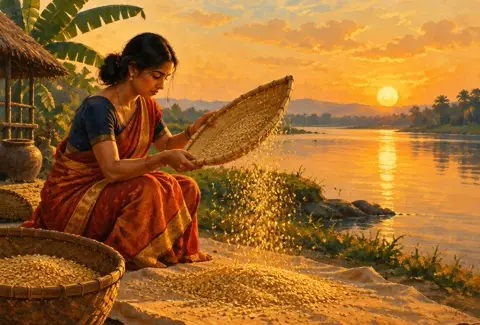
Purva Ashadha nakshatra, the 20th of the 27, lies in Dhanu (Sagittarius), from 13°20′ to 26°40′. Ashadha means the invincible or the unconquered, and Purva Ashadha is the former of the two Ashadha stars; its symbol is a winnowing fan or an elephant's tusk. Apah, the divine waters, preside over it and Venus is its lord.
Lord
Venus
Deity
Apah, the waters
Symbol
a winnowing fan
Gana
Manushya
Nadi
Madhya
Letters
Bhu, Dha, Pha, Dha
Purva Ashadha nakshatra padas
| Pada | Starts at | Letter | Rashi | Navamsa |
|---|---|---|---|---|
| 1 | 13°20′ Sagittarius | Bhu | Sagittarius (Dhanu) | Leo |
| 2 | 16°40′ Sagittarius | Dha | Sagittarius (Dhanu) | Virgo |
| 3 | 20°00′ Sagittarius | Pha | Sagittarius (Dhanu) | Libra |
| 4 | 23°20′ Sagittarius | Dha | Sagittarius (Dhanu) | Scorpio |
Purva Ashadha nakshatra meaning and deity
Apah are the cosmic waters of the Rig Veda, honoured as mothers who purify, heal and refresh, and invoked to wash away wrongdoing. Purva Ashadha joins that purifying power to an invincible spirit: the star of declared victory, of conviction that does not bend. The winnowing fan separates grain from chaff, an image of judgement and of clearing away what is useless.
Venus as lord brings charm and love of beauty into Jupiter's sign of faith. The month of Ashadha takes its name from the Ashadha stars; its full Moon is Guru Purnima, and its bright eleventh day, Devshayani Ekadashi, begins chaturmas. The star's main stars, in the bow of Sagittarius, lie toward the centre of the galaxy; they are usually identified as Kaus Media and Kaus Australis, δ and ε Sagittarii, the second the brightest star of the constellation. Venus rules three stars, Bharani, Purva Phalguni and Purva Ashadha, and all three are ugra in muhurta, the fierce side of the planet of pleasure. The Sun crosses Purva Ashadha from about 29 December to 11 January, inside kharmas.
The four padas of Purva Ashadha
Pada 1 (letter Bhu, 13°20′ to 16°40′ Dhanu) takes Simha as its navamsa, ruled by the Sun, confident and proud. Pada 2 (letter Dha, 16°40′ to 20°00′) has a Kanya navamsa, so Mercury colours it, the most analytical and articulate quarter.
Pada 3 (letter Pha, 20°00′ to 23°20′) maps to Tula in the navamsa, under Venus, the star's own lord, the most charming and artistic. Pada 4 (letter Dha, the retroflex sound, 23°20′ to 26°40′) lands in Vrishchik in the navamsa chart, with Mars as lord, the most intense. Names such as Bhumi or Bhushan for Bhu, Dhanush or Dhara for Dha and Phalguni or Phool for Pha follow the custom.
Purva Ashadha nakshatra characteristics
Varahamihira describes the Purva Ashadha native as proud, firm in friendship and blessed with a pleasing spouse. The star gives conviction, eloquence and the ability to inspire others: lawyers, preachers, activists, teachers, sailors, artists and debaters are typical. Its natives rarely accept defeat and can rally a group around a cause.
The difficulty is stubbornness and overconfidence, the certainty of being right. Its manushya gana suits public life, while the monkey yoni it shares with Shravana gives quickness and a playful streak. Purva Ashadha natives do best when their convictions are tested against honest advice. Of the three Venus stars it is the only one in a Jupiter sign, which gives its pleasures a moral or philosophical edge.
Purva Ashadha in kundli matching (kundli milan)
Purva Ashadha counts as manushya gana, monkey yoni and Madhya nadi. Shravana is its fellow monkey; the sheep stars Krittika and Pushya are the monkey's enemies. Bharani and Purva Phalguni, the other Venus stars, share its nadi.
The two Uttaras, Uttara Phalguni and Uttara Ashadha, give Purva Ashadha 19 of 21, and Shravana 18½. Chitra and Dhanishta drop to 3½. Mula, the neighbour on the other side, reaches 13: tara and nadi are full, but rakshasa against manushya gana gives 0.
Each star's koota points with Purva Ashadha
| Partner nakshatra | Tara (3) | Yoni (4) | Gana (6) | Nadi (8) | Of 21 |
|---|---|---|---|---|---|
| Ashwini | 3 | 2 | 5 | 8 | 18 |
| Bharani | 3 | 2 | 6 | 0 | 11 |
| Krittika | 3 | 0 | 0 | 8 | 11 |
| Rohini | 1½ | 2 | 6 | 8 | 17½ |
| Mrigashira | 1½ | 2 | 5 | 0 | 8½ |
| Ardra | 1½ | 2 | 6 | 8 | 17½ |
| Punarvasu | 1½ | 2 | 5 | 8 | 16½ |
| Pushya | 1½ | 0 | 5 | 0 | 6½ |
| Ashlesha | 1½ | 2 | 0 | 8 | 11½ |
| Magha | 3 | 2 | 0 | 8 | 13 |
| Purva Phalguni | 3 | 2 | 6 | 0 | 11 |
| Uttara Phalguni | 3 | 2 | 6 | 8 | 19 |
| Hasta | 1½ | 2 | 5 | 8 | 16½ |
| Chitra | 1½ | 2 | 0 | 0 | 3½ |
| Swati | 1½ | 2 | 5 | 8 | 16½ |
| Vishakha | 1½ | 2 | 0 | 8 | 11½ |
| Anuradha | 1½ | 2 | 5 | 0 | 8½ |
| Jyeshtha | 1½ | 2 | 0 | 8 | 11½ |
| Mula | 3 | 2 | 0 | 8 | 13 |
| Uttara Ashadha | 3 | 2 | 6 | 8 | 19 |
| Shravana | 1½ | 4 | 5 | 8 | 18½ |
| Dhanishta | 1½ | 2 | 0 | 0 | 3½ |
| Shatabhisha | 1½ | 2 | 0 | 8 | 11½ |
| Purva Bhadrapada | 1½ | 2 | 6 | 8 | 17½ |
| Uttara Bhadrapada | 1½ | 2 | 6 | 0 | 9½ |
| Revati | 1½ | 2 | 5 | 8 | 16½ |
Purva Ashadha in muhurat and Navratri
Muhurta Chintamani classes Purva Ashadha as ugra, fierce, with Bharani, Magha and the other Purvas, and it is not on the vivah list. In the Navratri Saraswati sequence, the goddess is invoked when the Moon is in Mula and given her main puja when the Moon reaches Purva Ashadha, so this star's day is the central day of Saraswati worship for many families.
Purva Ashadha remedies and worship
Offering water at a river, tank or temple honours Apah, the star's deity, and bathing in a river on Purva Ashadha days is an old custom. Lakshmi and Saraswati worship on Fridays are kept for Venus, the lord. In Kerala and Tamil Nadu the star is called Pooradam.
Purva Ashadha and the Vimshottari dasha
A Purva Ashadha birth begins in Venus mahadasha, 20 years in full, the longest of the nine. The Sun's 6 years and the Moon's 10 follow, so many natives move through three periods before thirty. With the Moon at 20° Dhanu, the middle of the star, exactly half of Venus's 20 years is left at birth.
Purva Ashadha and fair decisions in a housing society
A disagreement about water supply, a shared garden or festival arrangements can quickly become personal in a housing society. Purva Ashadha offers an interesting lens for these everyday negotiations. Its persuasive energy becomes more useful when neighbours feel heard than when one confident speaker wins the room.
Apah, the waters, are the presiding deity of Purva Ashadha, while its winnowing fan symbol separates grain from chaff. Together these traditional associations suggest movement with discernment: let information circulate, then distinguish the central issue from accumulated irritation. This is an inviting household reflection, especially when several generations share responsibility for community decisions.
Before a meeting, write down the practical outcome you hope for. A repaired pipe is a clearer goal than proving another committee member careless. Purva Ashadha’s confidence can then serve an achievable task, leaving enough room for a neighbour to offer a better method without anyone losing dignity.
Traditional reference points
| Attribute | Association |
|---|---|
| Deity | Apah, the waters |
| Planetary lord | Venus |
| Symbol | A winnowing fan |
| Gana | Manushya |
Prepare a proposal people can examine
Bring a short description of the issue, the available options and the people affected. A clear proposal makes participation easier for residents who are less comfortable speaking in a crowded gathering.
Separate evidence from frustration
Dates, maintenance records and photographs can establish what happened. Avoid adding guesses about motives, since even a sound suggestion becomes harder to accept when it arrives wrapped in accusation.
Invite an alternative route
Ask someone who disagrees to describe their preferred solution fully. Purva Ashadha need not abandon conviction to practise this courtesy; testing an idea can make the final agreement stronger.
Close the discussion with clarity
End by recording who will do what and when residents will hear back. Thank quieter contributors as well as the main speakers. Families can carry this habit into their own discussions about shared purchases or household duties. Comparing the listening symbolism of [Shravana](/astrology (jyotish)/nakshatra/shravana) adds a helpful companion theme: persuasion finds firmer ground when attention flows both ways.
Frequently asked questions
What does Ashadha mean?
Ashadha means the invincible or the unconquered. Purva Ashadha is the former and Uttara Ashadha the latter of the two Ashadha stars, and the month of Ashadha is named after them.
Who presides over Purva Ashadha?
Apah, the divine waters of the Rig Veda, honoured as purifying mothers. Venus is the star's planetary lord.
Is Purva Ashadha linked with Saraswati puja?
Yes. In the Navratri Saraswati sequence the goddess is invoked on the Mula day and receives her main puja when the Moon reaches Purva Ashadha, before the offering in Uttara Ashadha and the farewell in Shravana.
Who is the best partner star for Purva Ashadha?
The two Uttaras, Uttara Phalguni and Uttara Ashadha, top Purva Ashadha's list at 19 of 21, and Shravana, its monkey-yoni twin, comes next at 18½. Chitra and Dhanishta, rakshasa stars on its Madhya nadi, manage only 3½.
What is the naam akshar for Purva Ashadha?
Bhu, Dha, Pha and the retroflex Dha, in that order from 13°20′ to 26°40′ Dhanu; the two Dha sounds are different letters in Devanagari.
Is Purva Ashadha good for marriage?
No. Purva Ashadha is one of the three fierce Purvas, and wedding lists skip it in favour of its partner, Uttara Ashadha, which follows a day later and is a fixed star suited to marriage.
A chart shows positions; a report explains them. Read your career, marriage and dasha timing in one place.
Get my kundli report, ₹149