
Mrigashira Nakshatra
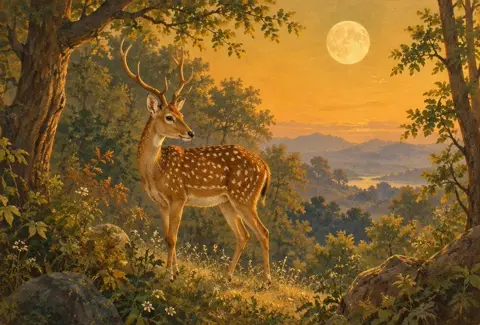
Mrigashira nakshatra, the 5th of the 27, runs from 23°20′ of Vrishabh (Taurus) to 6°40′ of Mithun (Gemini), so its first two padas are Taurus and its last two Gemini. Mrigashira means the deer's head, and its stars form the head of Orion. Soma, the Moon and the sacred drink of the Vedas, presides over it and Mars is its lord.
Lord
Mars
Deity
Soma, the Moon
Symbol
a deer's head
Gana
Deva
Nadi
Madhya
Letters
Ve, Vo, Ka, Ki
Mrigashira nakshatra padas
| Pada | Starts at | Letter | Rashi | Navamsa |
|---|---|---|---|---|
| 1 | 23°20′ Taurus | Ve | Taurus (Vrishabh) | Leo |
| 2 | 26°40′ Taurus | Vo | Taurus (Vrishabh) | Virgo |
| 3 | 0°00′ Gemini | Ka | Gemini (Mithun) | Libra |
| 4 | 3°20′ Gemini | Ki | Gemini (Mithun) | Scorpio |
Mrigashira nakshatra meaning and deity
The Aitareya Brahmana tells how Prajapati, taking the form of a stag, pursued his daughter, and how Rudra shot him with an arrow; the deer's head became this star and the hunter the star Sirius, called Mrigavyadha, the deer-slayer. The myth gives Mrigashira its central image: the searching deer, always moving, curious and a little wary. Indian astronomers marked the star by its yogatara, Meissa (λ Orionis), the faint star at the top of Orion, with the two brighter shoulder stars beside it.
Soma, its deity, is both the Moon and the drink of immortality pressed in Vedic sacrifice, so the star is linked with gentleness, delight and the search for something precious. Mars as lord adds energy to that search. The month of Margashirsha draws its name from the full Moon here, and in the Bhagavad Gita Krishna says, among months I am Margashirsha. Dattatreya Jayanti is kept on Margashirsha Purnima, the full Moon of that month. In Tamil the star is Mirugasirisham and in Malayalam Makayiram. In Maharashtra the Sun's entry into Mrigashira, around 8 June, is called Mrug and treated as the arrival of the monsoon, the date farmers wait for before sowing. The Sun is still in Mrigashira at the June solstice, about 21 June, and moves into Ardra a day or two later.
Mrigashira nakshatra padas explained
Pada 1 (letter Ve, 23°20′ to 26°40′ Vrishabh) is a Simha-navamsa quarter ruled by the Sun, warm and confident. Pada 2 (letter Vo, 26°40′ to 30°00′ Vrishabh) falls in Kanya navamsa under Mercury, the most careful and studious quarter.
Pada 3 (letter Ka, 0°00′ to 3°20′ Mithun) takes Tula as its navamsa, ruled by Venus, the most charming and artistic. Pada 4 (letter Ki, 3°20′ to 6°40′ Mithun) has a Vrishchik navamsa, so Mars colours it, the most intense and probing. Names such as Ved or Vedika for Ve, Vohra for Vo, Kavya or Karan for Ka and Kiran or Kirti for Ki follow the custom. The two Vrishabh padas sit in Venus's sign and the two Mithun padas in Mercury's, so the star moves from comfort to curiosity across its 13°20′.
Mrigashira nakshatra characteristics
Varahamihira describes the Mrigashira native as restless, clever, a little timid, eloquent, energetic, prosperous and fond of pleasure. The star suits researchers, travellers, writers, musicians, teachers, salespeople and anyone whose work involves seeking and finding. Its natives make lively company and gentle partners.
The deer's wariness shows as anxiety and a tendency to move on before finishing. A Mrigashira Moon in Vrishabh is steadier and more sensual; in Mithun more talkative and changeable. Deva gana gives a kind temperament and the serpent yoni, shared with Rohini, a sensuous one.
Mrigashira in kundli matching (kundli milan)
Mrigashira brings a deva gana, the serpent yoni and the Madhya nadi to a match. Its yoni twin is Rohini, the neighbouring star, and its one yoni enemy is Uttara Ashadha's mongoose. The other two Mars stars, Chitra and Dhanishta, share its nadi.
The table puts Rohini first at 20 of 21, then three stars at 19: Hasta, Swati and Shravana. Chitra and Dhanishta, the Mars stars that share Mrigashira's nadi and differ in gana, are lowest at 6.
Each star's koota points with Mrigashira
| Partner nakshatra | Tara (3) | Yoni (4) | Gana (6) | Nadi (8) | Of 21 |
|---|---|---|---|---|---|
| Ashwini | 1½ | 2 | 6 | 8 | 17½ |
| Bharani | 1½ | 2 | 5 | 0 | 8½ |
| Krittika | 1½ | 2 | 1 | 8 | 12½ |
| Rohini | 3 | 4 | 5 | 8 | 20 |
| Ardra | 3 | 2 | 5 | 8 | 18 |
| Punarvasu | 1½ | 2 | 6 | 8 | 17½ |
| Pushya | 1½ | 2 | 6 | 0 | 9½ |
| Ashlesha | 1½ | 2 | 1 | 8 | 12½ |
| Magha | 1½ | 2 | 1 | 8 | 12½ |
| Purva Phalguni | 1½ | 2 | 5 | 0 | 8½ |
| Uttara Phalguni | 1½ | 2 | 5 | 8 | 16½ |
| Hasta | 3 | 2 | 6 | 8 | 19 |
| Chitra | 3 | 2 | 1 | 0 | 6 |
| Swati | 3 | 2 | 6 | 8 | 19 |
| Vishakha | 1½ | 2 | 1 | 8 | 12½ |
| Anuradha | 1½ | 2 | 6 | 0 | 9½ |
| Jyeshtha | 1½ | 2 | 1 | 8 | 12½ |
| Mula | 1½ | 2 | 1 | 8 | 12½ |
| Purva Ashadha | 1½ | 2 | 5 | 0 | 8½ |
| Uttara Ashadha | 1½ | 0 | 5 | 8 | 14½ |
| Shravana | 3 | 2 | 6 | 8 | 19 |
| Dhanishta | 3 | 2 | 1 | 0 | 6 |
| Shatabhisha | 3 | 2 | 1 | 8 | 14 |
| Purva Bhadrapada | 1½ | 2 | 5 | 8 | 16½ |
| Uttara Bhadrapada | 1½ | 2 | 5 | 0 | 8½ |
| Revati | 1½ | 2 | 6 | 8 | 17½ |
Mrigashira in muhurat
Muhurta Chintamani places Mrigashira among the mridu, soft, stars with Chitra, Anuradha and Revati, suited to the arts, new clothes, friendship and romance. It is on both the classical vivah and griha pravesh lists, and its gentle nature makes it a favourite for naming ceremonies and first lessons in music.
Mrigashira remedies and worship
Worship of the Moon and of Shiva, who wears the crescent, on Mondays is the customary practice, together with offerings to Kartikeya or Hanuman on Tuesdays for Mars. Some families recite the Soma hymns or simply offer milk to Shiva on the Mrigashira day each month.
Mrigashira and the Vimshottari dasha
A Mrigashira birth begins in Mars mahadasha, 7 years in full, followed by Rahu's 18 and Jupiter's 16. A Moon in the Mithun half of the star leaves only a short Mars balance, so Rahu's period begins in early childhood.
Mrigashira and giving curiosity a welcoming place
Some children bring a new question to every meal, while some adults quietly collect possibilities about courses, travel, or work. Mrigashira offers a gentle household language for this searching spirit. Curiosity can feel delightful until relatives begin asking when the search will end. A little structure can preserve its pleasure without turning every interest into an immediate life decision.
Soma's association with Mrigashira brings a reflective quality to the image of the deer's head. Families can treat enquiry as attentive exploration: noticing, asking, and returning with something learned. A visit to a museum, a conversation with a craftsperson, or an afternoon observing birds may satisfy that impulse without requiring an expensive purchase or a dramatic change of direction.
Mrigashira also benefits from separating exploration from commitment. Reading about a profession is different from enrolling in a course, and enjoying a hobby does not require making it a career. Giving each stage its own name can reduce pressure at home. The person searching is then able to share discoveries without fearing that every conversation will become an interrogation about the future.
Mrigashira traditional reference
| Association | Traditional detail |
|---|---|
| Deity | Soma |
| Planetary ruler | Mars |
| Symbol | Deer's head |
| Pada sounds | Ve Vo Ka Ki |
Keep a notebook for unfinished questions
Write down what caught the family's attention and where an answer might be found. Mrigashira curiosity feels respected even when a busy evening cannot accommodate a long discussion immediately.
Explore through one small encounter
Borrow a book, attend an introductory session, or speak with someone doing the work. Firsthand details often clarify an interest more effectively than repeated speculation around the dining table.
Return with an observation, not a verdict
Ask what surprised the explorer and what they would like to understand next. Avoid demanding certainty before there has been enough experience to form a thoughtful preference or decision.
Choose a gentle point for review
After a practical trial, discuss whether to continue, pause, or change direction. Mrigashira's search can mature into discernment when the family welcomes discovery. Finding a useful question is sometimes the beginning of finding a satisfying path.
Frequently asked questions
Which rashi is Mrigashira nakshatra?
Mrigashira is split: padas 1 and 2 lie in Vrishabh (Taurus) and padas 3 and 4 in Mithun (Gemini). A Taurus Moon in Mrigashira is steadier, a Gemini Moon more restless and talkative.
What does Mrigashira mean?
Mrigashira means the deer's head. Its stars form the head of Orion, and in the Aitareya Brahmana it is the head of the stag shot by Rudra, with Sirius as the hunter.
Is Mrigashira nakshatra good for marriage?
Yes. Soma's gentle star is one of the four soft stars and appears on the wedding and griha pravesh lists, and it is a long-standing favourite for naming ceremonies too. Tithi, weekday and lagna complete the choice.
Which nakshatra matches best with Mrigashira?
Rohini gives Mrigashira 20 out of 21, the two serpent stars sitting on different nadis. Hasta, Swati and Shravana each reach 19, while Chitra and Dhanishta stay at 6.
Which letters suit a Mrigashira baby?
Ve and Vo for the Taurus half of the star, Ka and Ki for the Gemini half. Familiar names such as Kavya, Karan and Kiran belong to the Gemini padas.
Why is Margashirsha special?
The month of Margashirsha is named after Mrigashira, as its full Moon (purnima) falls near this star, and in the Bhagavad Gita Krishna names it as the best of months. Many families choose it for weddings and pilgrimages.
A free chart is the map. The report is the guide that reads it with you.
Get my kundli report, ₹149